
I Tried These Two Korean Retinal Products for 10 Days – And One Has Really Surprised Me
SPONSORED
Main image – Courtesy of writer
I’ve been a K-beauty fan for years. In fact, given how often Korean brands always seem to come up with clever new ways of making skincare both super effective and genuinely enjoyable to use, I sometimes wonder why I bother looking anywhere else.
Which makes it all the more surprising that, despite being a committed vitamin A enthusiast, I’ve never actually tried a K-beauty retinal before. Especially when some of the better-known retinal products available here in the UK come with considerably heftier price tags (I’m looking at you, Medik8).

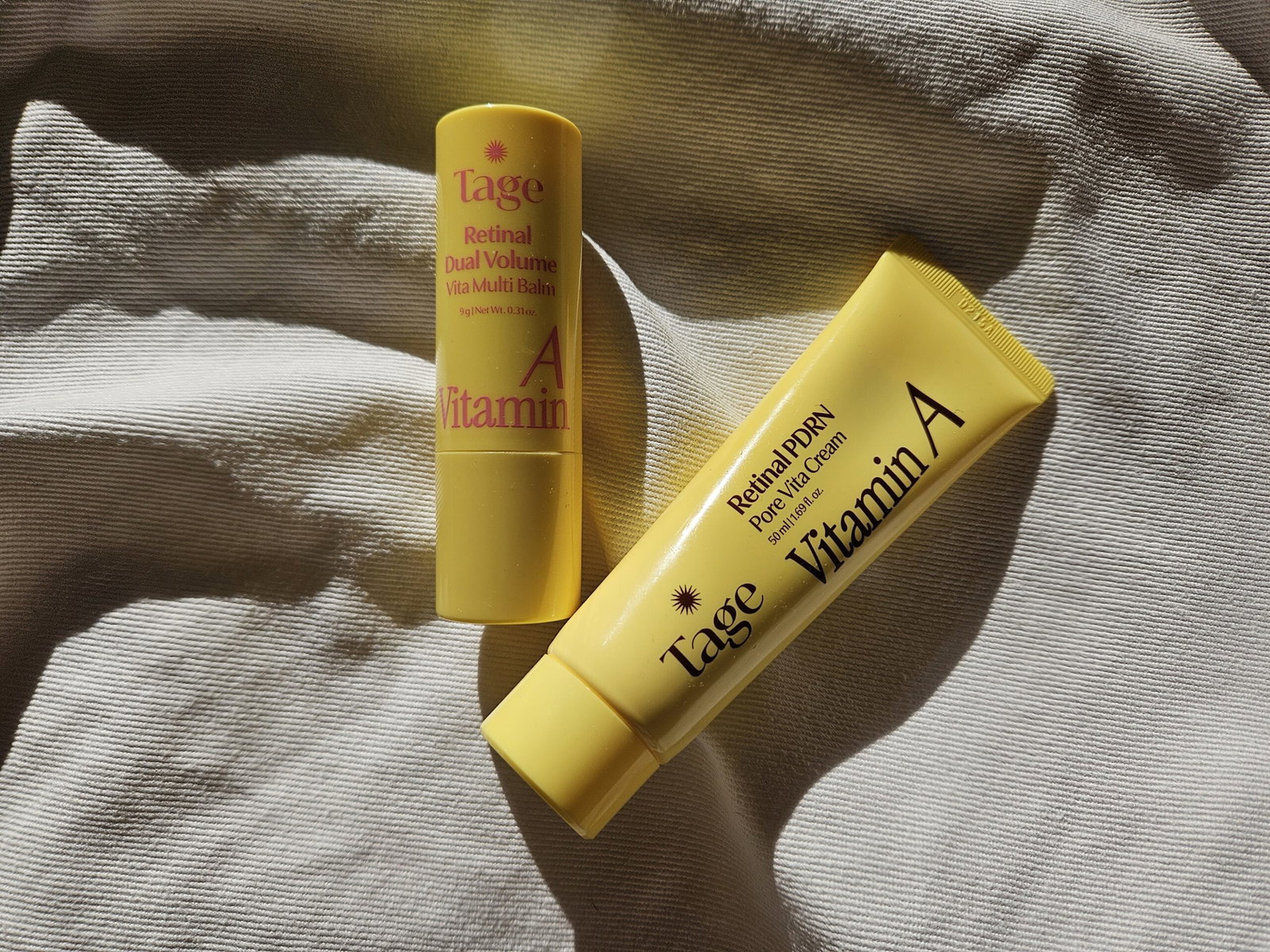
So when Tage, a Korean skincare brand from BENOW (the company behind K-beauty favourites fwee and numbuzin), offered me the chance to try its Vita A Retinal Multi Balm Stick and Vita A Retinal PDRN Pore Booster Cream, I was very happy to put that right.
And having now used both products daily for 10 days, I have to say I’m rather impressed. And not necessarily for the reasons I was expecting, either.
Why I was interested in Tage’s retinal duo
First though, a little background on my skin. I’ve been using prescription tretinoin for some time, and while I’m a huge fan of vitamin A skincare for tackling the early signs of ageing, my skin isn’t universally enthusiastic about it.
In particular, the backs of my hands and the delicate skin on my upper eyelids simply aren’t as tolerant of my tret as the rest of my face. Which is frustrating, since these are – ironically – the exact areas where I’m starting to notice fine lines, changes in skin texture and loss of volume.
So the idea of two comparatively affordable Korean retinal products- one of which comes in a rather ingenious stick format- was particularly appealing. And given how much Korean skincare I’ve already tried, I was particularly curious to see how these would compare.
Retinol, retinal and tretinoin: what’s the difference?
If you’re wondering why I’m making such a fuss about retinal specifically, allow me to explain.
Retinol, retinal (also called retinaldehyde) and tretinoin are all forms of vitamin A, but they aren’t quite the same thing. For retinol to become retinoic acid – the form your skin can use directly – it first needs to convert into retinal and then into retinoic acid. Retinal, meanwhile, only needs that final conversion.

Prescription tretinoin is already retinoic acid, which is one reason it can be particularly effective, although irritation can also be a real issue.
All this doesn’t automatically mean retinal is stronger than every retinol product though, or gentler than tretinoin for everyone. Concentration, formulation and individual skin tolerance all matter.
But I do like the idea of using retinal, particularly when it’s paired with a formulation that feels comfortable enough to use consistently. And that’s where Tage comes in.
My Tage Vita A Retinal Multi Balm Stick review
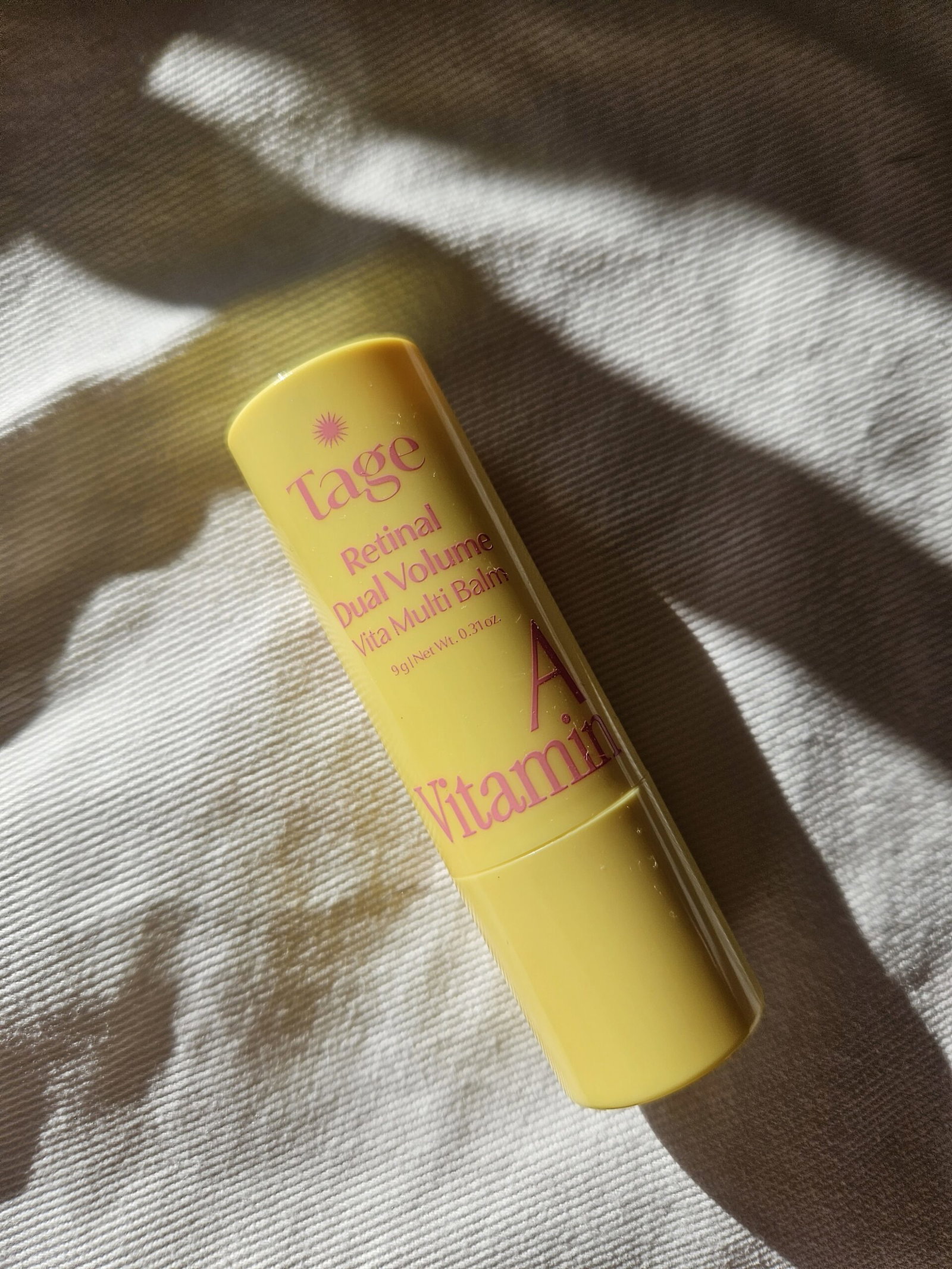
Image – Courtesy of writer
Of the two products, this is the one I was most curious about. The Tage retinal stick combines retinal with Volufiline, an ingredient the brand promotes for improving the appearance of fine lines and areas where skin is beginning to lose volume. The idea is that you can swipe it directly onto specific areas rather than applying another cream or serum all over your face.
And the first thing to say is that the packaging is genuinely lovely. It’s bright, cheerful and reassuringly sturdy, with an easy twist-up mechanism and a rather unusual triangular stick containing a pink inner core surrounded by yellow product.
According to Tage, the pink centre contains 6% Volufiline, along with collagen and ingredients designed to support the skin barrier, while the yellow outer layer contains retinal. So rather than having to apply two separate products, you’re essentially getting both formulations in one swipe.
It looks almost like a particularly sophisticated piece of candy, which probably isn’t the most scientific way to describe skincare, but there we are.
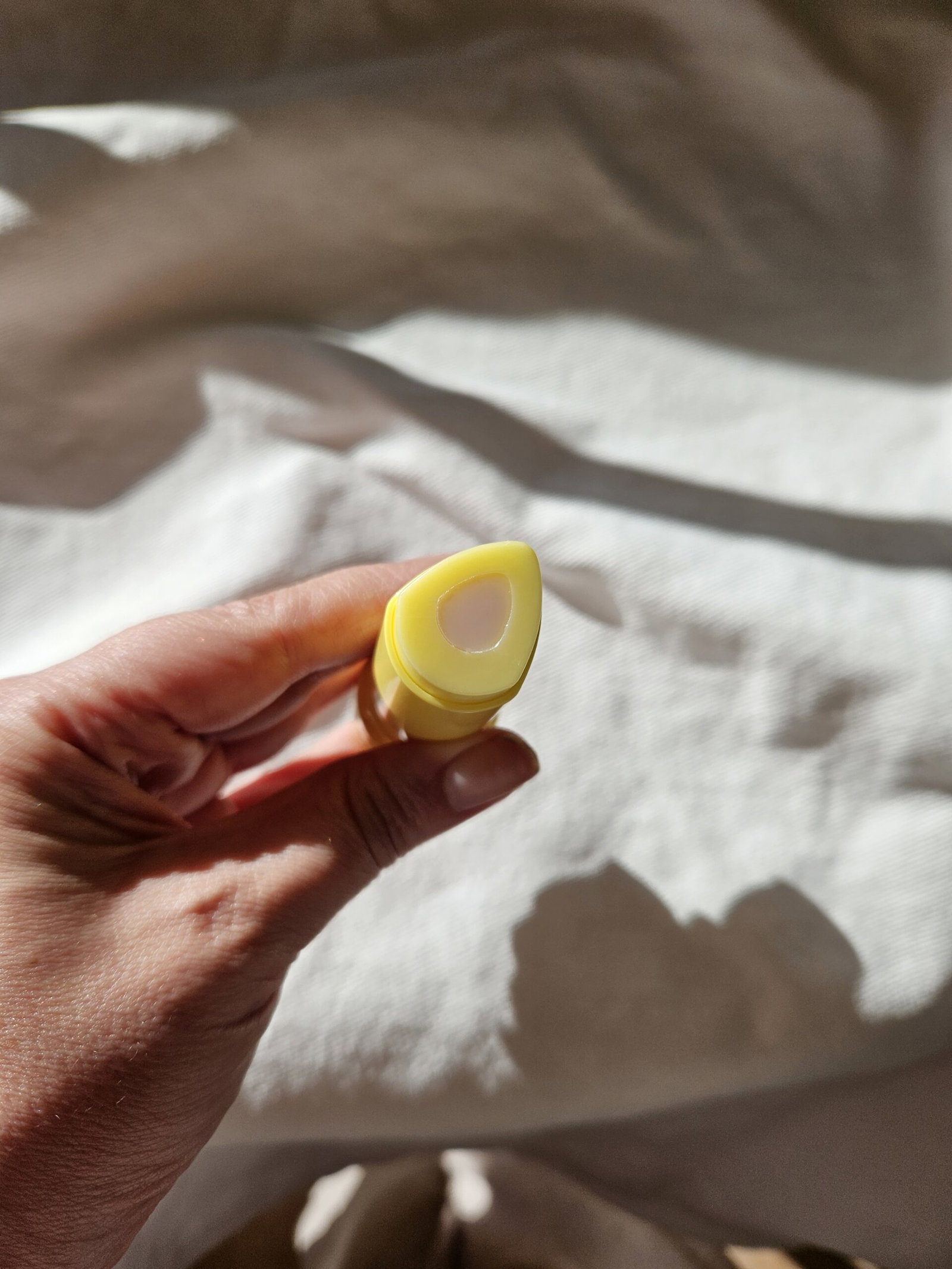
Image – Courtesy of writer
More importantly though, it’s beautifully practical. I’ll admit I was initially slightly concerned that a solid stick might drag across my skin, particularly on delicate areas. Happily, that couldn’t be further from the case.
The formula becomes incredibly soft on contact, gliding across the skin without any noticeable tugging and leaving a lovely dewy finish in its wake.
I’ve been using it on the backs of my hands and around my eyes for 10 days now, applying it to clean, dry skin before moisturising each evening. I’ve since checked with Tage, who recommend keeping application to the orbital eye area rather than directly on the eyelids. I’ve also tried the product on the smile lines around my mouth.
On my hands, three or four swipes are enough to cover the area comfortably, while the pointed, teardrop-like shape makes precise application surprisingly easy. And there’s something rather satisfying about being able to apply a targeted treatment in seconds without getting another product all over your fingers.
But did I notice any results in such a short time frame? Well, yes, actually. Although I should probably explain what I mean by results.
After application, the backs of my hands and the skin around my eyes looked noticeably dewier and felt more moisturised. There was also a definite immediate plumping effect, particularly on my hands, which made the skin look temporarily smoother. I noticed a subtler smoothing effect around my smile lines too.
The before-and-after photos here show the immediate hydrating and smoothing effects I noticed around my smile lines after applying the products, rather than any longer-term changes to my skin.
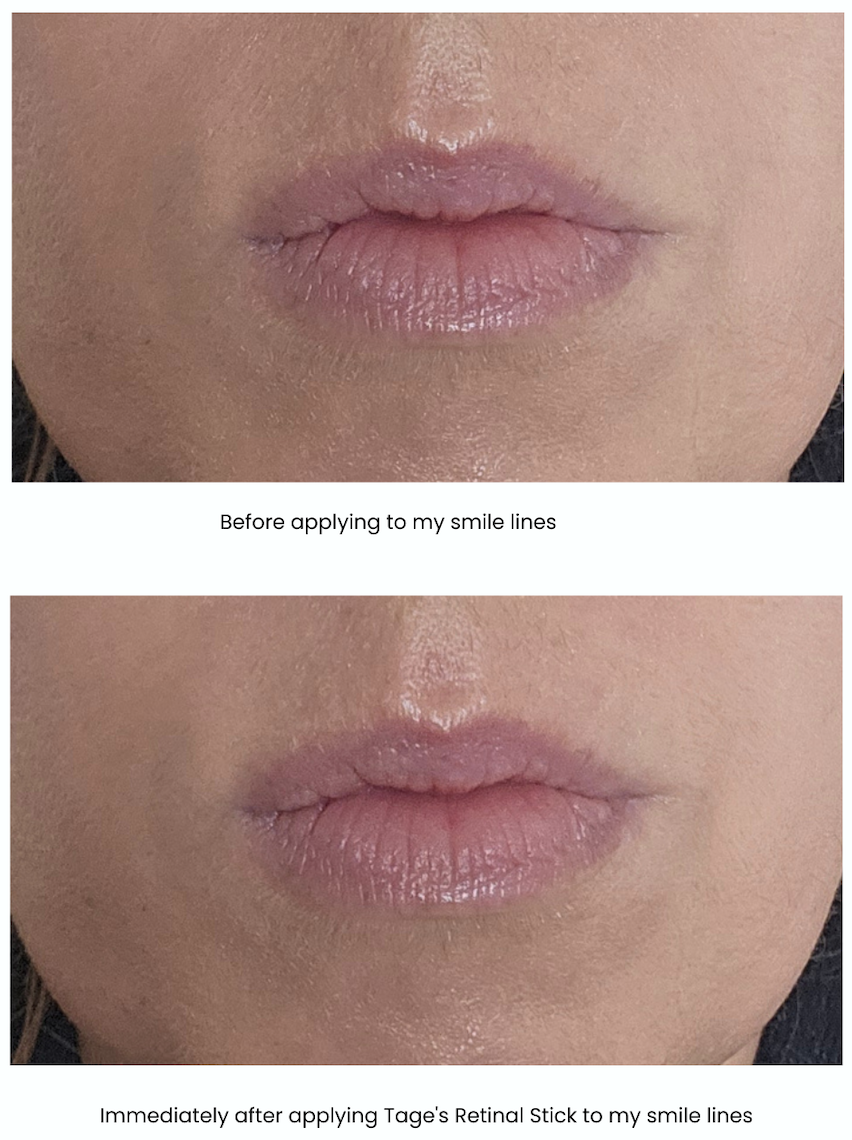
Of course, I wouldn’t dream of claiming that 10 days of testing has reversed any fine lines or restored lost volume. Those are longer-term questions, and I’ll need considerably more time before I can comment on them.
Nor can I tell you that the immediate plumping is specifically down to Volufiline rather than the moisturising properties of the formula. What I can say though is that I really like the way my skin looks and feels straight after applying it – it’s definitely softer and bouncier.
Perhaps even more importantly, I’ve found myself genuinely looking forward to using it, because it’s offered a possible answer to one of my particular skincare bugbears: how to treat the backs of my hands without irritating them.
For someone who already has a fairly involved skincare routine, that’s quite an achievement.
My Tage Vita A Retinal PDRN Pore Booster Cream review
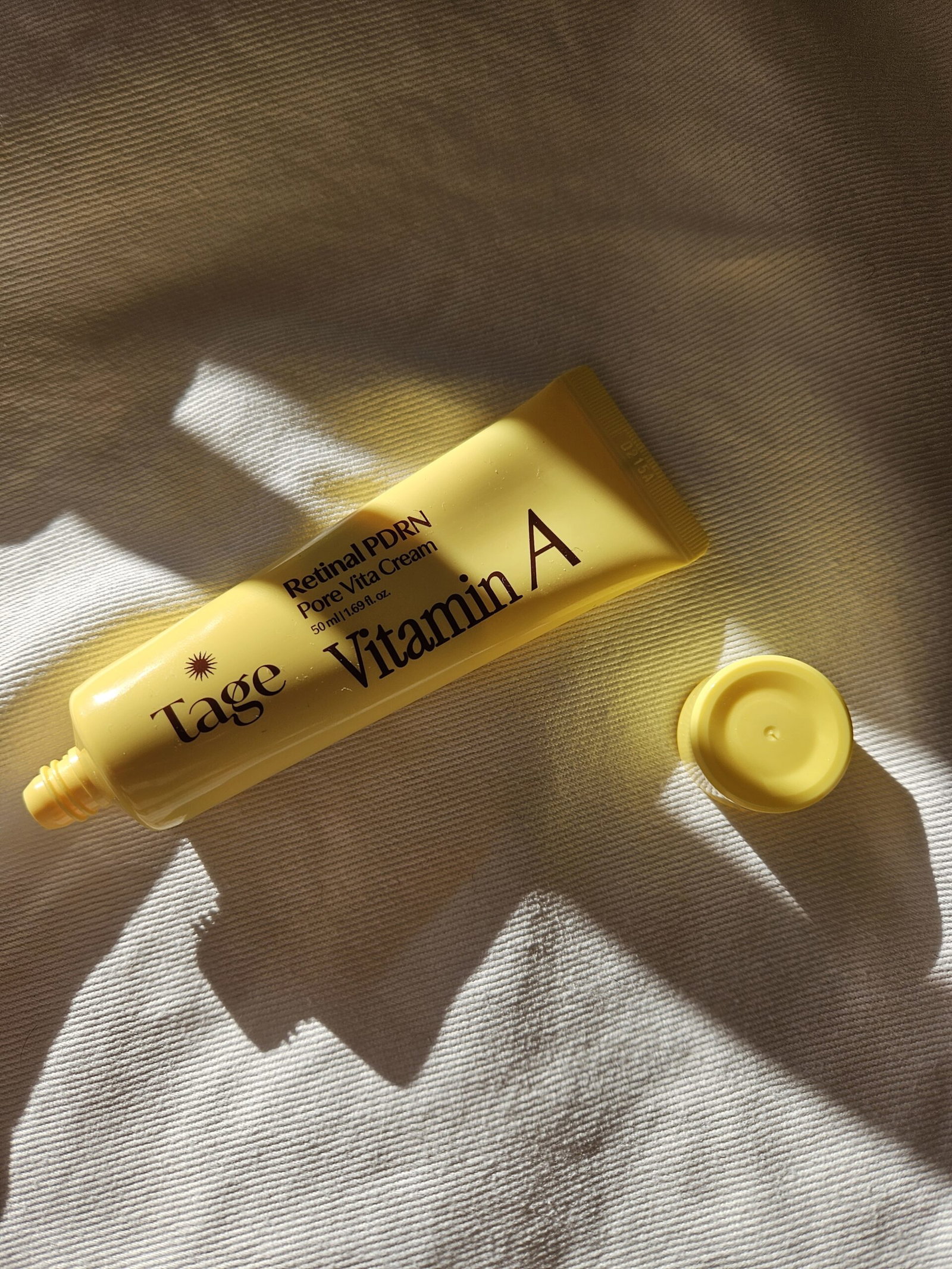
Image – Courtesy of writer
The second product in the duo is Tage’s Retinal PDRN Pore Booster Cream, which takes a slightly more conventional approach.
The Tage retinal pore cream combines retinal with PDRN, an ingredient that’s attracted considerable attention in Korean skincare, and is marketed for improving the appearance of pores and uneven skin texture.
PDRN is made from purified DNA fragments, often sourced from salmon, and has become a bit of a K-beauty favourite thanks to its potential skin-repairing and hydrating benefits. Although, as with plenty of fashionable skincare ingredients, there’s still a difference between promising research and what a particular cream can actually deliver.
The cream itself is yellow, with a fairly thick consistency that immediately reminded me of Medik8’s Crystal Retinal. There’s no particularly noticeable fragrance to my nose – perhaps just a very faint clinical smell – and the texture feels reassuringly substantial without being heavy.
I’ve been applying it to my neck each evening, straight after cleansing and before moisturiser. And I have to say, it’s been extremely comfortable. It spreads easily, doesn’t leave my skin feeling greasy and gives a nice touch of dewiness without the sort of residue that makes you conscious of having applied a treatment.
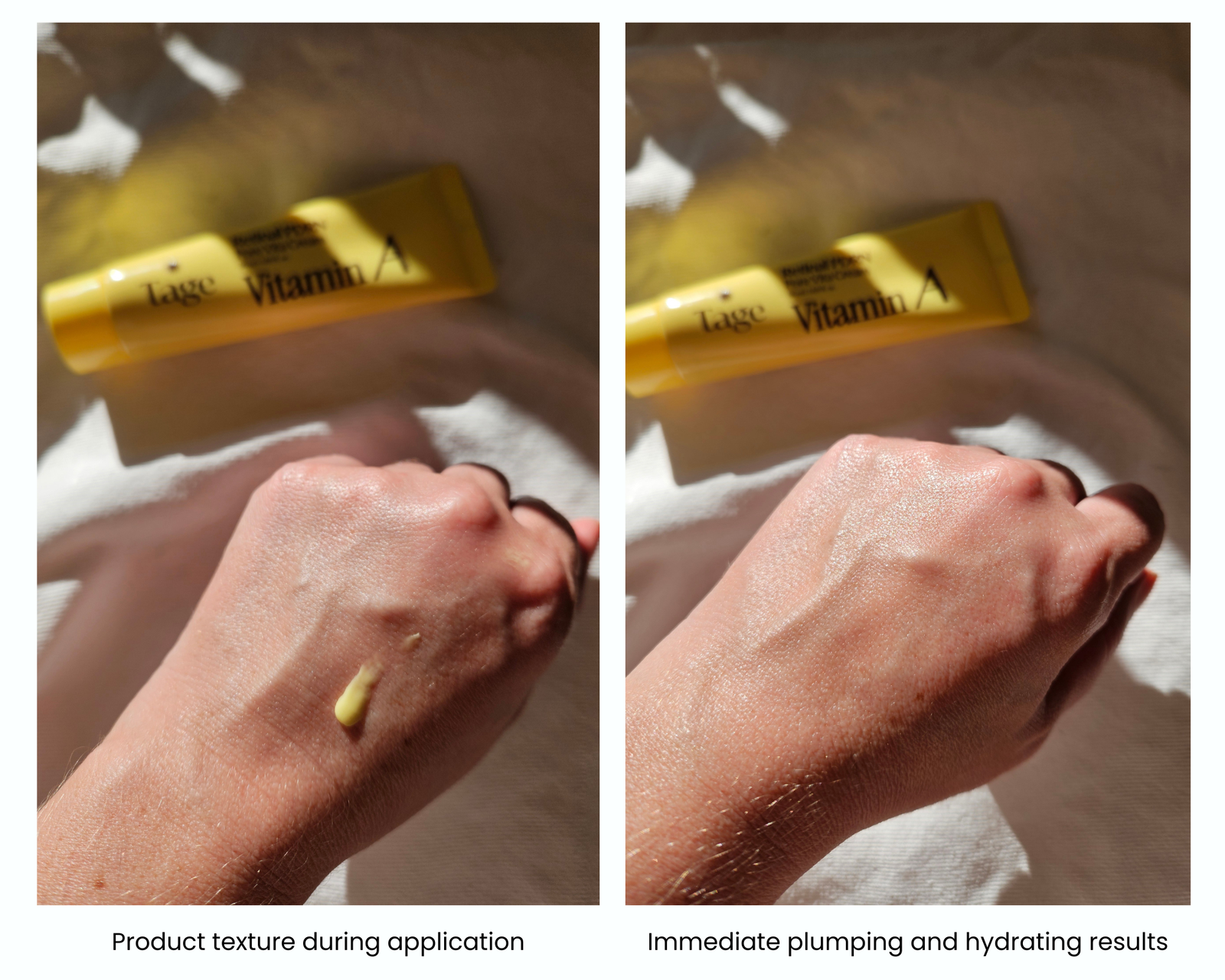
Image – Courtesy of writer
Perhaps most impressively, I’ve experienced no redness, peeling or irritation whatsoever. Of course, I’m already a regular retinoid user, so my skin is accustomed to vitamin A products. Someone introducing retinal for the first time may have a very different experience.
Still, given that the neck can be particularly sensitive – and retinoids aren’t exactly famous for being universally well tolerated – I’ve been pleasantly surprised.
It hasn’t noticeably changed the texture of the skin on my neck yet, although frankly I wouldn’t have expected to see any significant changes in just 10 days.
What I have noticed is how consistently comfortable and moisturised my skin has felt throughout testing. And given the potential for retinoids to cause dryness or irritation, particularly on the neck, I don’t think that’s something to dismiss.
For now, the appeal of this cream is its pleasant texture, comfortable finish and what feels like a very good-quality formulation for the price. I’ve really enjoyed using it so far, and I’ll definitely be interested to see what happens with continued use.
Which Tage retinal product would I recommend?
Well, both, actually, although I do have a clear favourite.
The Retinal PDRN Pore Booster Cream strikes me as a great option for anyone curious about trying retinal for the first time, provided they introduce it gradually. But what I like most is that it doesn’t feel like a product you’d necessarily grow out of as your skin becomes more accustomed to vitamin A. After all, I’ve been using prescription tretinoin for some time, and I’m still thoroughly enjoying it.
But it’s the Retinal Stick that has really won me over. Not because I think it’s going to perform miracles on my fine lines overnight, but because it addresses one of my own specific skincare bugbears.
The backs of my hands are an area I’ve wanted to treat more consistently for ages, but I don’t particularly want to use an expensive prescription formula there, especially when my skin doesn’t tolerate it particularly well.
Having a targeted product that’s quick to apply, feels lovely and leaves my skin looking instantly more moisturised is genuinely useful.
I also love that the stick format makes it so easy to incorporate into a routine. I can see it appealing to someone who finds traditional retinoid routines a bit of a faff, just as much as to an experienced vitamin A user looking for something a little different.
And for anyone who’s been looking into retinal skincare for sensitive skin, I think both products are worth considering, with the usual proviso that even a lovely, comfortable formula can cause irritation for some people.
My one caveat with both products is that, after 10 days, I simply can’t tell you whether they’ll deliver on all their longer-term anti-ageing claims.
But I can tell you that they’ve been an absolute pleasure to use so far. And given their appealing price point, beautiful textures and the fact that neither has caused me any irritation, I think that’s a very promising start.
I’ll certainly be continuing with both.
Where to buy
Always introduce retinoids gradually, patch test new products and use adequate sun protection. Avoid applying retinoids directly to the eyelids unless the product is specifically approved for that area. Retinoids are generally avoided during pregnancy.