
Why Fake Tan is Increasingly Looking More Like Skincare Than Makeup
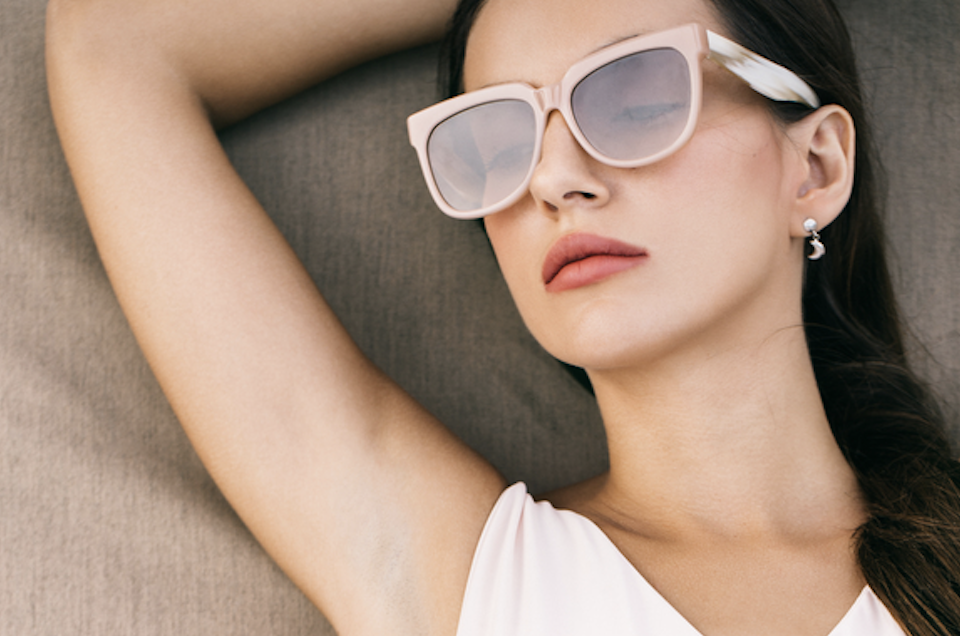
Main image – Visualspectrum/Stocksy
There was a period, not all that long ago, when fake tan occupied a very specific place in our beauty culture.
It smelled faintly of biscuits, transferred onto white bedsheets with astonishing commitment, and often left behind the sort of patchy wrists and orange ankles that made people swear off self-tan entirely for the foreseeable future. The goal, broadly speaking, was simply to look more tan – realism felt somewhat secondary.
Now though, tanning is starting to sit in a different category altogether.
Increasingly, self-tan is being treated less like makeup and more like skincare; part glow-enhancer, part body care, part subtle illusion of health. The modern fake tan consumer is often not trying to look dramatically bronzed at all. Think less Jersey Shore, more strategic complexion enhancement.
That shift has changed the products themselves too. Today’s tanning formulas are filled with skincare ingredients, sold on hydration and finish as much as colour payoff, and increasingly marketed around “skin confidence” rather than obvious transformation. On TikTok, self-tan is now used for everything from contouring to faux freckles to abdominal definition. And few brands have benefited from that evolution quite like Loving Tan.
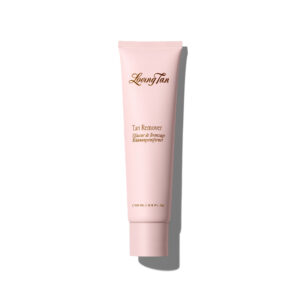
Image – Loving Tan
The Australian company – now one of ULTA Beauty’s top-selling tanning brands in North America – has quietly built a reputation for the sort of deep but believable glow beauty consumers tend to become faintly evangelical about and has been seen on the likes of Sabrina Carpenter and Alix Earle. According to the brand, one bottle of its bestselling 2HR Express Self-Tanning Mousse sells globally every 40 seconds.
Following Loving Tan’s new rebrand, I spoke to Marketing Director Jessie Dean about why tanning formulas are becoming increasingly skincare-adjacent, the mistakes still causing streaky results, and why modern tanning culture now has far more to do with polished “good skin” than obvious bronze.
“She decided to create her own”
Like many successful beauty brands, Loving Tan began with a practical frustration rather than a grand industry vision.
Back in 2010, founder Johanna Hinton was working as a lawyer in Brisbane, Australia, while also religiously booking weekly spray tans every Thursday. Eventually, the reality of work began colliding with the upkeep required to maintain the sort of polished, professional-looking glow she wanted.
“When the demands of her job caused her to keep missing these appointments, she went in search for a self-tan that delivered the same professional, natural-looking results that she could use at home and fit in with her schedule,” Jessie Dean explains.
The problem, she says, was that nothing on the market quite replicated the finish of a salon spray tan. “After finding nothing that delivered the same results, she decided to create her own.”
That salon-level finish remains central to the brand’s identity today, even after its recent visual rebrand. “Our iconic formulas and philosophy remain the same,” Dean says. “To create products for tanning lovers who desire a dark and natural-looking tan they can do at home with professional results they can trust.”
Fake tan has become more “skincare coded”
One of the more interesting shifts in tanning over the past few years is how heavily the category has drifted towards skincare language and functionality.
Where tanning products were once largely judged on colour payoff alone, consumers now expect hydration, smoothing benefits and skin-friendly textures alongside bronzing results. The rise of “express” formulas has accelerated that expectation further.
“We’re all looking for more from less,” Dean says. “So we have started to combine a lot more skincare into our tanning formulas to combine these steps as part of your routine.”
That shift partly explains the growing popularity of products like Loving Tan’s new 10 Minute Express Smoothing Self-Tanning Body Mask – a format that would have sounded almost contradictory in tanning a decade ago.
According to Dean, the formula took over four years of development and testing. And while “express” tanning still sounds faintly suspicious to many consumers burned by previous generations of rushed formulas, she insists the trade-off in results is no longer what it once was.
“We work really hard to ensure all of our formulas deliver the same professional results regardless of development time,” she says.
“Preparation is the key”
Of course, no amount of formulation technology has entirely solved the oldest fake tan problem of all; uneven fade.
“Preparation is the key for an even tan,” Dean says firmly.
The advice itself is surprisingly unglamorous. Hair removal and exfoliation should ideally happen 24 hours before application to allow pores to settle properly. Old tan should also be removed fully beforehand – something many people skip in the hope of “topping up” colour instead.
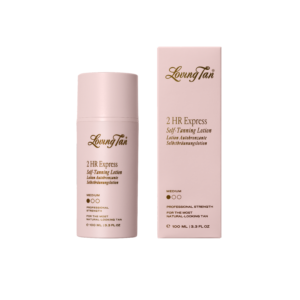
Image – Loving Tan
“This gives your pores enough time to close and ensures a smooth even application of your tan,” she explains.
Certain body parts remain notoriously difficult regardless of experience level. Hands, ankles and knees still tend to expose rushed application instantly. Dean recommends moisturising these areas first and applying tan “sparingly” with a blending brush rather than straight from a mitt.
Interestingly, she also suggests something that feels slightly more psychologically revealing about modern tanning culture; beginners using facial tanning products on their hands and feet first “while you build up your confidence in using self-tan.”
Confidence, increasingly, seems to be part of the category itself.
TikTok has changed tanning culture completely
If early 2000s tanning was about looking obviously bronzed, TikTok-era tanning has become far more technical.
People now use self-tan for faux freckles, contouring, abdominal definition and sculpting effects that blur heavily into makeup artistry. Tanning has become less of a single finished look and more of a toolkit.
“We love seeing how our customers use their self-tan in other ways,” Dean says. “For contouring, to create longer lasting freckles, for ab definition.”
That shift has inevitably begun influencing product development too, with consumers increasingly requesting more targeted tanning formats designed for precision application rather than all-over colour.
And yet despite the complexity of modern tanning routines online, Dean’s final piece of advice circles back to something surprisingly simple.
“Keeping hydrated from the inside and out will help prolong your self-tan,” she says. “Along with applying a gradual tan every other day.”
The takeaway
Part of Loving Tan’s success may ultimately come down to the fact that it understands something many beauty brands still miss; most people do not necessarily want to look more glamorous anymore. They want to look healthier, smoother, more rested, slightly more expensive versions of themselves.
Modern self-tan increasingly sits inside that wider beauty category of “maintenance without obvious effort” – closer to skin tint than stage bronze.
And while tanning trends will inevitably continue evolving alongside social media aesthetics, the appeal of a believable glow people can achieve quickly at home appears remarkably consistent.
Even if the biscuits smell, thankfully, has largely disappeared.


Get Glowing!