
Color-Changing Foundation Sounds Too Good to Be True. Here’s What Smooche’s Formula Is Actually Doing on Your Skin
Main image – Smooche
SPONSORED
Buying foundation online is the one beauty purchase most of us still get wrong. You read every swatch description on the product page, hold your forearm up to the laptop screen, pick the shade that looks closest and then spend the next three weeks pretending the bottle you ordered isn’t very slightly orange. So it was probably inevitable that somebody would try to remove the decision altogether.
Colour-changing foundations arrive as a single pale, neutral-looking cream that supposedly adjusts to whatever tone you happen to be once you start blending. Said out loud, it sounds less like cosmetic science and more like something engineered for a TikTok reveal.
The version currently getting the most attention is the Smooche Color Changing Foundation, which the brand says has now been bought by more than 100,000 people and holds a 4.8 out of 5 average across its on-site reviews.
Which raises the obvious question. Is anything actually happening when you blend it, or is this clever packaging with a good camera angle? Keep scrolling.
Why shade matching goes wrong in the first place
The reason your foundation looks right at 8am and wrong at 4pm usually isn’t the shade you chose. It’s a combination of three things: the lighting you swatched it in, the way pigments in the formula react with the oils your skin produces through the day, and the fact that most of us sit somewhere between two shade numbers rather than neatly on one.
Add in the undertone problem. Brands describe tones as cool, neutral or warm, but very few people are consistently one of those across their whole face. Redness around the nose and chin is common, and it throws the match off in a way a single shade number can’t account for.
That’s the gap adaptive formulas are aiming at. Not a better shade range, but no shade choice at all.
What a colour-changing foundation actually is
The trick is not colour that appears from nowhere. The pigment is in the bottle the whole time, it’s just held in suspension so it doesn’t read as colour until you disturb it.
Most adaptive formulas suspend tiny pigment particles inside a pale, opaque base built around titanium dioxide, which is what gives the product its whitish look in the pump. The colour itself comes from iron oxides, the same red, yellow and black mineral pigments used in conventional foundation. When you press and blend, the friction of your fingers or brush plus the warmth of your skin breaks that suspension and disperses the pigments into the base. The tone you end up with depends on how much product you’ve laid down and how far you’ve worked it out.
So the shift is real, and it is mechanical rather than magical. It also has a ceiling, which is the part product pages tend to skate over: the pigment load in the bottle is fixed, so the range of tones any single adaptive formula can actually reach is finite. That’s why it matters to know which range a specific one was built for.
How the Smooche formula works
Smooche describes its version as an adaptive pigment formula using mineral pigments that look soft and neutral at first contact and then disperse as you smooth the product across the face, settling into a tone within seconds rather than minutes.
On the finish, the brand is fairly specific. One pump is designed to give medium, buildable coverage with a velvety matte texture, which you can layer over redness or blemishes without it turning into a mask. It carries SPF 15, and Smooche says the wear is up to 16 hours without oxidising or transferring.
The important detail, and credit to the brand for putting it on the page rather than burying it: this formula is made for fair to medium skin tones. If your complexion sits deeper than that, it is not going to reach you, and no amount of blending will change that. Worth knowing before you order.
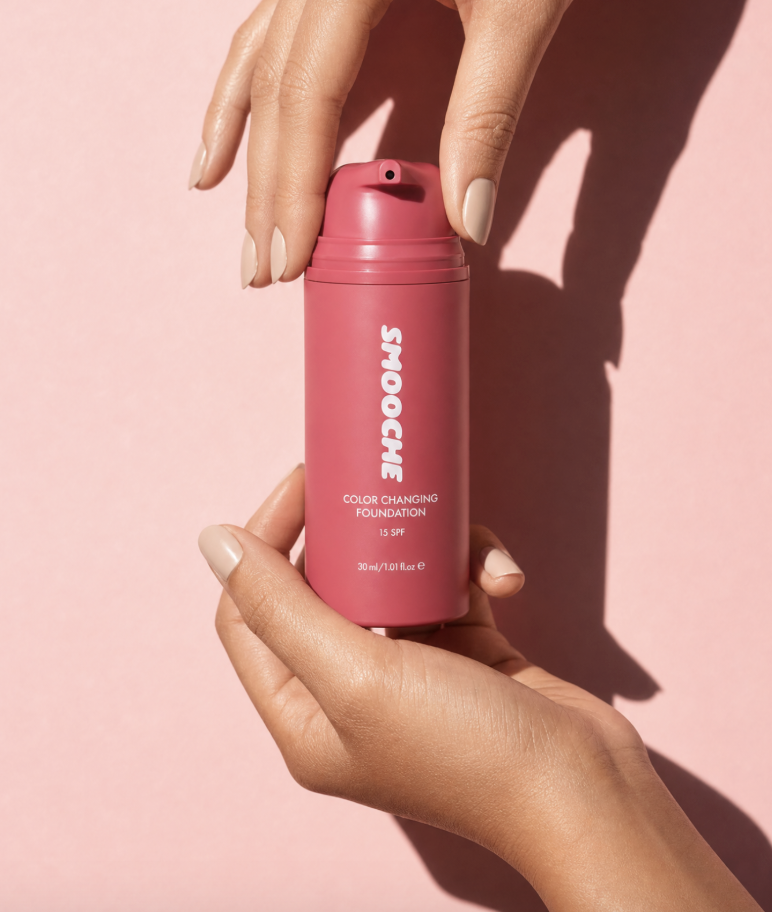
Image – Smooche
What’s actually in it
Smooche publishes the full ingredient list on the product page, which is more than a lot of viral brands bother to do.
The colour work is done by titanium dioxide, mica and three iron oxides (CI 77491, CI 77492 and CI 77499). Alongside those, glycerin does the hydrating, and tocopheryl acetate is a form of vitamin E. The formula is vegan, cruelty-free, dermatologist-tested and non-comedogenic. It does contain parfum, so if fragrance in a base product is a hard no for you, this one isn’t it.
Who it’s for, and who it isn’t
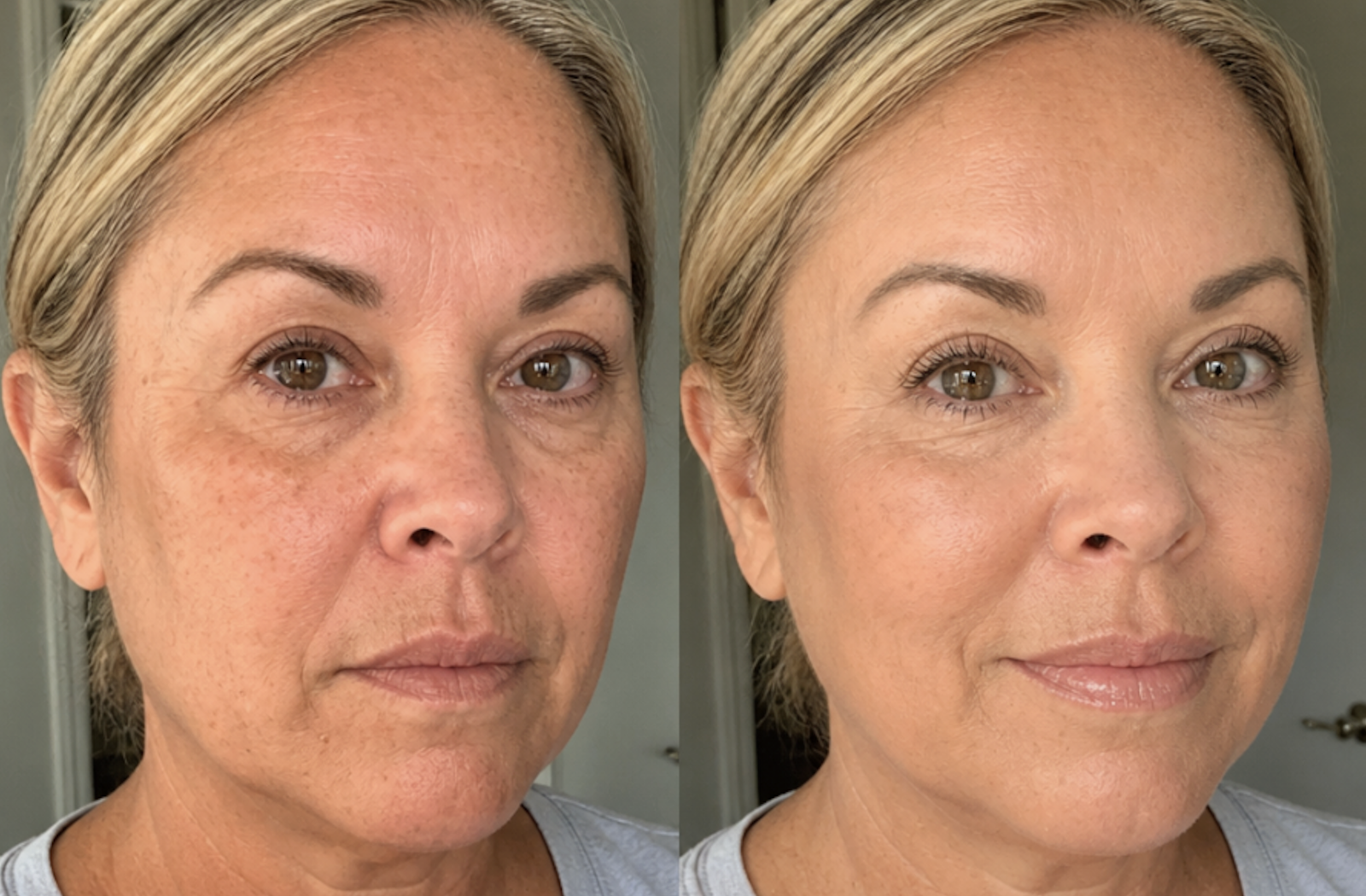
It’s a good fit if you sit in the fair to medium range, you buy most of your makeup online and you’ve lost money on returns, or you want something that evens out redness and softens the look of fine lines without sitting heavily on the skin.
It’s less of a fit if you want a dewy finish, since the texture is deliberately velvety matte, or if you want full coverage from a single pump. You can build it, but it’s designed to look like skin first.
What other users are saying
The on-site reviews sit at 4.8 out of 5 across more than 51,000 ratings, and the recurring theme is less about coverage and more about relief at not having to choose.
Patricia, a verified buyer, described watching the formula shift on her skin and land on the pink undertone she says she can never find in stores. Margaret, 61, wrote that the thing that won her over was that it didn’t settle into her smile lines or turn orange by lunchtime, which is the exact complaint most of us have about foundation on drier, more textured skin.
Smooche also ran an eight-week panel of its own customers. In it, 97% said the foundation matched their skin tone straight away and 95% said it didn’t feel heavy or mask-like. Those are the brand’s own figures rather than independent testing, so read them as you would any in-house panel, but they line up with what the public reviews are saying.
Overall value for money
It sits in the same bracket as a mid-range department store foundation, which feels fair for something carrying SPF 15 and a 16-hour wear claim rather than colour alone.
The part that actually shifts the math is the 30-day money-back shade guarantee. The reason buying foundation online is a gamble is that a mismatch becomes your problem, not the brand’s, and you end up with a half-used bottle in a drawer. Smooche will refund you within 30 days if the shade doesn’t land, and it ships free to 65-plus countries with duties covered, so there’s no surprise charge at the door either.
The takeaway
Adaptive foundation isn’t a gimmick, but it also isn’t magic. It’s pigment dispersion, done well, in a base designed to release the right amount of color as you work it in.
What Smooche has done sensibly is be clear about the limits. It’s built for fair to medium tones, it gives a matte finish rather than a glow, and it’s backed by a guarantee that takes the risk off you rather than leaving it on your vanity. For anyone who has genuinely never found their shade number online, that’s a reasonable thing to try.