
How to Create a Cohesive Bridal Look: Hair, Makeup and the Wedding Dress
SPONSORED
Main image – Maria Orlova
A cohesive bridal look rarely fails on the big choices. Those, most brides get right; the dress is loved, the hair suits her, the makeup still looks like her. Where it slips is the joins. Hair against neckline, foundation against fabric. And photographs show those joins without mercy. Where to start, then? With the one thing that can’t change on the day.
Why a cohesive bridal look starts with the dress
Hair can be restyled at the trial and a lipstick can be swapped in about a minute, but once the dress has been altered it’s staying exactly as it is, and so I treat it as the brief for everything else. Brides still bring me hair inspiration taken from someone else’s wedding, worn with someone else’s dress, and then can’t work out why it looks slightly off on them (it’s almost never the hair’s fault).
What helps most at that first conversation is a set of pictures of the actual dress: the front, the back and a close-up of the bodice, taken beside a window rather than under the shop’s lighting, which is warm and very flattering and hides precisely the details your artist needs to see. It also helps to know what the fabric is called, since satin, crepe and Mikado all photograph differently, and “white and a bit shiny,” while honest, doesn’t tell anyone much about which skin finish to choose.
The venue matters as well, though less than the dress does. A minimal crepe gown can look right in a small registry office and in a cathedral alike, but the hair usually needs a different level of polish in each before it feels at home in the room.
Reading the neckline before choosing the hair
Face shape gets the attention. Necklines matter more; they’re also far easier to read.
Strapless or sweetheart? A wide, open frame across the shoulders. Hair down or half up softens it. With an updo, the frame looks emptier; a fuller shape at the back of the head, or a statement earring, brings the balance back. Off-the-shoulder is different. There, the whole point is the collarbones and the line across the shoulders, so long hair falling forward fights it. A low bun lets it breathe.
High collars, illusion necklines with lace climbing to the jaw: another story. Add loose hair and the space around the face gets crowded. Lift it. Earrings? Tiny, or none at all; halters follow the same rule and nearly always look cleaner with the neck clear.
Open backs, I’m stubborn about. Most of the ceremony gets photographed from behind; loose hair covers the very feature you bought the dress for.
Then the practical side. Beading and corded lace catch long hair, and after a day of hugging and turning, strands get caught in the appliqué or snap off. Up, then. Kinder to the hair; kinder to the dress.
The shade of white and what it does to your makeup
White isn’t one colour. Optical white, natural or diamond white, ivory, champagne, dresses with nude or blush underlays; each changes what looks good on your face.
Optical white is the toughest. Bluish, paper-bright, and hard on warm tones; bronzer turns muddy beside it, peach blush leans orange, and teeth can suddenly read a little yellow. So with these dresses I go cool. Pink cheeks, sheer bronzer. Whitening your teeth? A couple of weeks ahead, so any sensitivity or patchiness has time to settle.
Ivory and champagne, easier. Their warmth sits closer to skin; peach, terracotta and soft bronze all look intended next to them. But champagne can drain very fair skin. A touch more blush fixes it.
Which white is yours? Hold the hem against printer paper, in daylight. Creamy beside the paper means ivory territory; barely different means optical or natural white. Not phone photos, though. Cameras correct white balance on their own.
Matching the finish to the fabric
Of everything that goes into a bridal look, fabric is probably the part people talk about least, which is a shame, because it tells you more about how the hair and skin should be finished than any mood board.
Stiff fabrics like Mikado and heavy satin hold their shape, much as a boned wedding corset top does, and the hair tends to look best when it seems held as well, whether that’s a smooth chignon, a sleek low twist or waves that have been brushed out and polished rather than left tousled. I usually keep the skin mostly matte with these and save a little sheen for the cheekbones, since soft, undone texture next to a structured bodice can look as though the hair belongs to a different, more relaxed wedding.
Tulle, chiffon and soft lace are another matter, because they move with you, and here a loose braid or a few pieces left out at the temples makes much more sense, along with dewier skin. I’d still powder the centre of the face, though, as shine on the forehead has a way of turning into a white patch the moment the photographer uses flash.
With beading and sequins, the dress is already doing its own sparkling, and adding glittery eyeshadow and a strong highlighter tends to set the face competing with the bodice, so I keep the lids matte or satin and the highlight soft.
Accessories, in the end, should look as though they came with the dress: pearls alongside pearl trim, crystal alongside beading, and pins and earrings in the same metal as any silver or gold embroidery, because mixed metals show up surprisingly clearly in close-ups. Fresh flowers are lovely with relaxed lace and, to my eye at least, look a little lost against sharp tailoring.
Building the hair around the veil
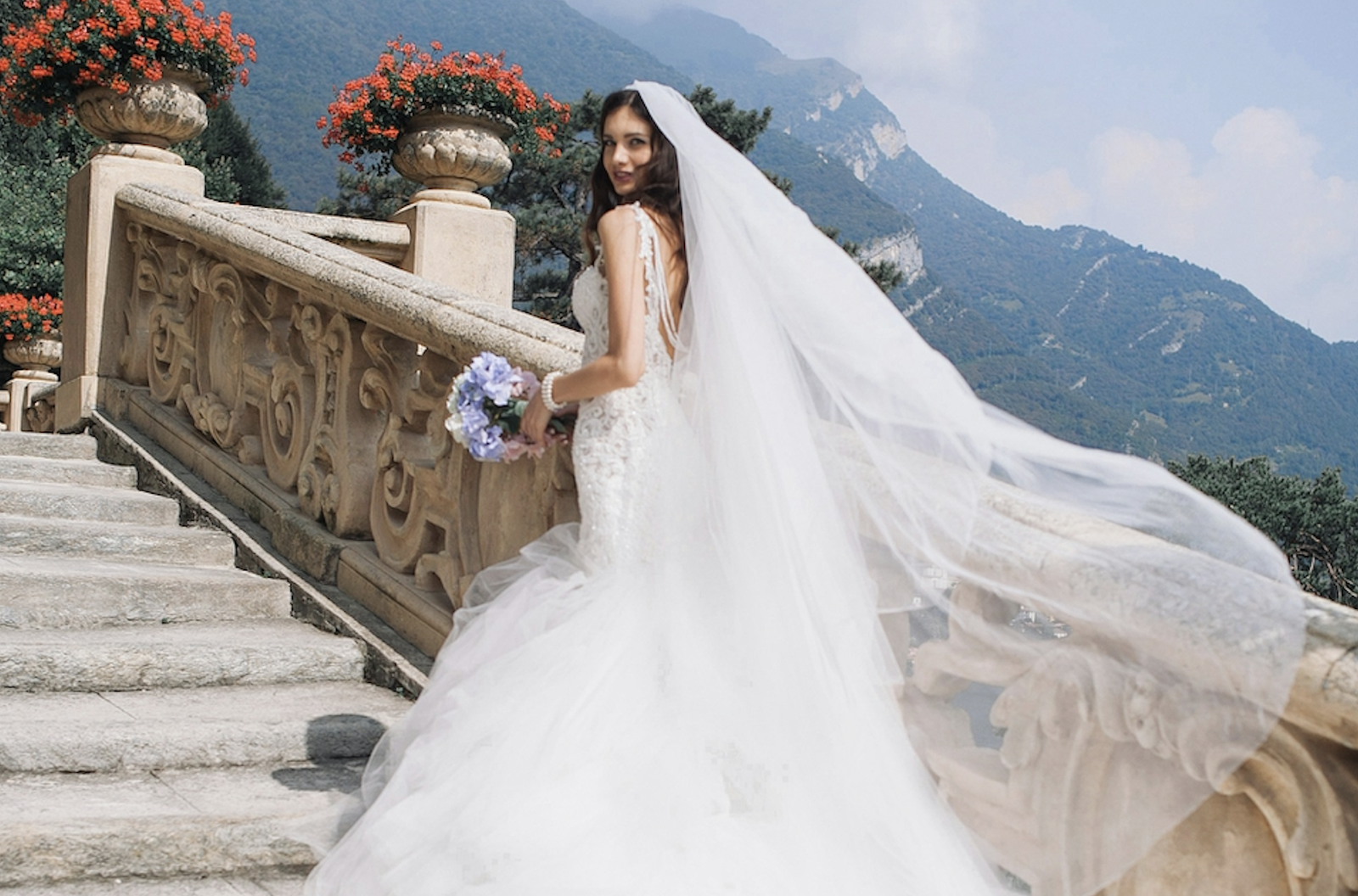
Veils often get picked in a hurry at the final fitting. Only later does the stylist hear about them. Wrong order; a veil is something the hairstyle has to carry.
Weight, above all. A short tulle veil sits almost anywhere; a cathedral veil with a lace border can drag its comb right out of soft hair, especially hair washed that morning. So wash the day before. Grip helps. And tell your stylist the length early, because the comb needs a base built for it: a bun, a hidden braid, or two pins crossed into an X.
Comb placement changes the mood. High at the crown, above the bun? Framed face, formal feel. At the nape it’s softer; the style stays on show. Hair down works too, with a small teased and pinned section underneath for the comb.
Bring the swatch to the veil appointment as well. On bright white, an ivory veil looks dingy in photos. Lace edging, too, deserves a close comparison with the dress lace; delicate Chantilly next to chunky guipure rarely works.
A blusher layer over the face for the aisle? Set the lipstick first. Blot, then press powder through a tissue; otherwise the tulle wears a print of your lips.
Makeup the camera can see
Natural is what most brides ask for. Easier said than done; the camera and the long day both push back.
Some products bounce flash back as a pale cast. Flashback, makeup artists call it. Mineral SPF with zinc oxide or titanium dioxide is a common cause; silica-heavy setting powders, another. In daylight, nothing shows. So test: a dim room, a flash photo, a week or two before.
Distance matters as well. What looks right at arm’s length can vanish across a room, so bridal makeup carries more definition: fuller brows, lower-lash mascara, a lip one shade richer than everyday. Still you; just visible.
Then the hours. Waterproof mascara, always; tears turn up during the vows or the speeches for nearly everyone. Lip liner over the whole lip before lipstick, so it fades evenly. Touch-ups? Blotting papers, not more powder. Layer on layer of powder looks dry by evening.
And keep skincare boring in the last few weeks. No new peels, no new actives; nothing your skin hasn’t met before.
Getting dressed without ruining anything
This part of the morning causes more panic than any hairstyle, and it gets far less attention than it deserves, probably because there’s nothing glamorous about it.
Fresh spray tan rubs off on pale fabric, and it tends to show up at the underarms, inside the straps and along the neckline, which are exactly the places nobody checks until the photos come back. Booking it about two days before the wedding and rinsing it off well avoids most of the problem, and on the day itself I’d leave body shimmer and self-tanner alone entirely.
The order of getting ready matters too: hair and makeup first, and the dress last of all. Most gowns can be stepped into, which makes life easy, but if yours has to go over your head, ask someone to hold a thin scarf over your face while it goes on, because otherwise foundation ends up on the lining and the crown of the hairstyle gets flattened just before you leave. Separates sidestep the issue entirely; with a bridal corset and skirt set, you step into the skirt and fasten the corset around you, so nothing passes over your hair at all.
Deodorant needs a little time to dry before the dress goes on, and clear formulas are much safer than white ones. And once the hugging starts, a quick blot of the lipstick beforehand is worth the five seconds it takes, since a smudge on an ivory shoulder isn’t something you can get out on the day.
Using the trial properly
Two to three months out is the usual timing; it leaves room to change course. Treat it as a rehearsal. A top close to the dress in colour and neckline. The veil, earrings, hair pieces and swatch, all with you.
Photograph it in daylight, indoor light and flash. From across the room, too, not only close up. Then keep the look on all day; the afternoon tells you more than the chair did. Curl holding? Lipstick fading evenly, or leaving a ring?
Products and shades, written down by you or your artist. Then the morning’s timings. Bridal hair and makeup usually take two to three hours together; build in at least thirty spare minutes. You’ll use them.