
Expression Lines or Loss of Firmness? How to Match the Peptide to the Concern
SPONSORED
Main image – Veralair/Stocksy
Picture buying three peptide serums over the course of a year, each promising firmer skin, and none delivering quite what you’d hoped. Look at the labels, though, and two of the three were designed mainly for expression lines.
“Peptides” has become a catch-all word on serum labels, but peptides aren’t interchangeable. Each one is used for a different visible concern. If you’ve bought a peptide serum and wondered why it didn’t do what you’d hoped, the answer may simply be that it was designed for a different job.
Matching the peptide to the concern gets much easier once you know which names to look for.
Concern one: Expression lines
Expression lines are the lines that form where your face moves most: crow’s feet, forehead lines and the lines between the brows. The peptides most associated with softening their appearance are:
- Argireline® (Acetyl Hexapeptide-8). One of the most widely used peptides for the appearance of expression lines. Acetyl Hexapeptide-3 is its older name, so you may still see it on some labels.
- Leuphasyl® (Pentapeptide-18). Often paired with Argireline in the same formula.
- Snap-8™ (Acetyl Octapeptide-3). A longer amino acid sequence in the same family as Argireline, commonly found in eye and forehead formulas.
Concern two: Loss of firmness
Firmness is about how skin looks along the jawline, cheeks and neck. The peptides used for a firmer, fuller-looking appearance include:
- Matrixyl™ 3000 (Palmitoyl Tripeptide-1 and Palmitoyl Tetrapeptide-7). A two-peptide complex used for the appearance of fine lines and firmer skin.
- Syn®-Coll (Palmitoyl Tripeptide-5). Used for the look of fuller, smoother skin, and often paired with Matrixyl 3000.
- Peptamide™ 6 (Hexapeptide-11). Used for skin that looks more elastic and lifted.
Concern three: Both
If you’re noticing both, that’s where multi-peptide serums can make sense, but only if the label tells you how much of each peptide is inside. A serum that lists six peptides without percentages could contain a meaningful amount of one and just a trace of the rest.
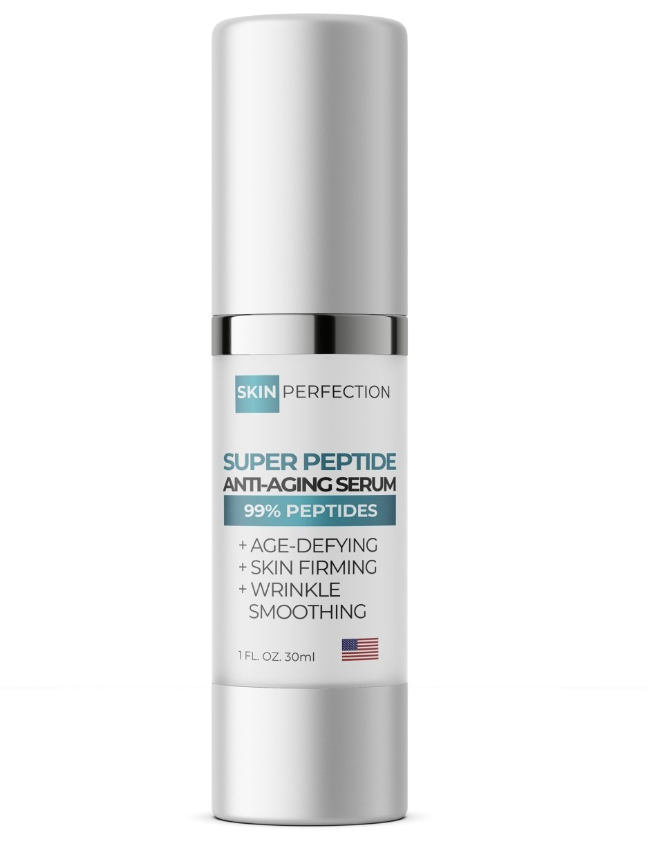
If you’re looking for a single serum that covers both, take a look at the label on the Skin Perfection Super Peptide Anti-Aging Serum, which answers that question. It lists every peptide by percentage: 24% Peptamide 6, 20% Matrixyl 3000, 15% Syn-Coll, 10% Argireline Peptide Solution, 10% Leuphasyl and 10% Snap-8, plus 5% Melanostatine® 5 and 5% Aldenine® for the look of a more even skin tone. Together, those eight ingredients make up 99% of the formula.
Signs a label is hiding something
A few phrases should make you look twice before buying. “Peptide complex” or “proprietary blend” often means the individual amounts aren’t disclosed. A long list of peptides right at the end of the ingredient list usually means very small amounts. And a front label that leads with a trendy ingredient name but gives no number is relying on the name, rather than the dose. The more specific a label is, the easier it is to know whether a serum fits your concern.
How to choose
- Identify your main concern: expression lines, firmness, or both.
- Check the label for the peptides that match it.
- Look for a printed percentage for each one.
- Use the serum morning and night, before moisturiser, and be consistent.
If your skin is sensitive, patch test first and start with once a day.
Disclosure: This article was written by Kari Thomas, cosmetic formulator and founder of Skin Perfection®, a Boise, Idaho skincare company.
© 2026 Kari Thomas. All rights reserved.