
Top 4 Gua Sha Facial Oils for Your Skincare Routine
SPONSORED
There is something undeniably relaxing about a Gua Sha routine until the tool begins dragging across the skin.
The facial oil underneath matters just as much as the tool itself. A well-chosen formula provides enough slip for smooth strokes while leaving the skin feeling comfortable, nourished, and glowing.
However, the richest or most expensive oil is not automatically the best choice. Texture, absorption rate, fragrance, and skin type all influence how enjoyable the routine feels.
We assessed the four best Gua Sha facial oils for glowing skin to find the formulas that balance skincare benefits with the cushioning texture needed for facial massage. Our selection includes lightweight everyday oils, richer ritual-worthy blends, and options for more particular skin types.
Why your facial oil can make or break a gua sha routine
A facial oil is not just a finishing touch. It forms a barrier between the tool and the skin, which minimises the frictional force that may cause skin pulling and discomfort and unnecessary redness.
Research also suggests that Gua Sha itself can temporarily affect circulation near the treated area. In a small study of 11 healthy adults, researchers observed a significant increase in surface microcirculation for up to 25 minutes after Gua Sha treatment.
While the study was performed on the back rather than the face, it offers some insight into the physiological effects of the massage technique.
Ingredients are important, but the formula as a whole is just as important. Rosehip, jojoba, camellia, grapeseed, squalane, and pomegranate seed oils are frequently used in facial blends, but no single oil is necessarily right for all skin types.
Ultimately, the best choice is a product that will provide you with controlled glide and is comfortable to wear and feels good on your skin so you can use it regularly.
Our Top Picks
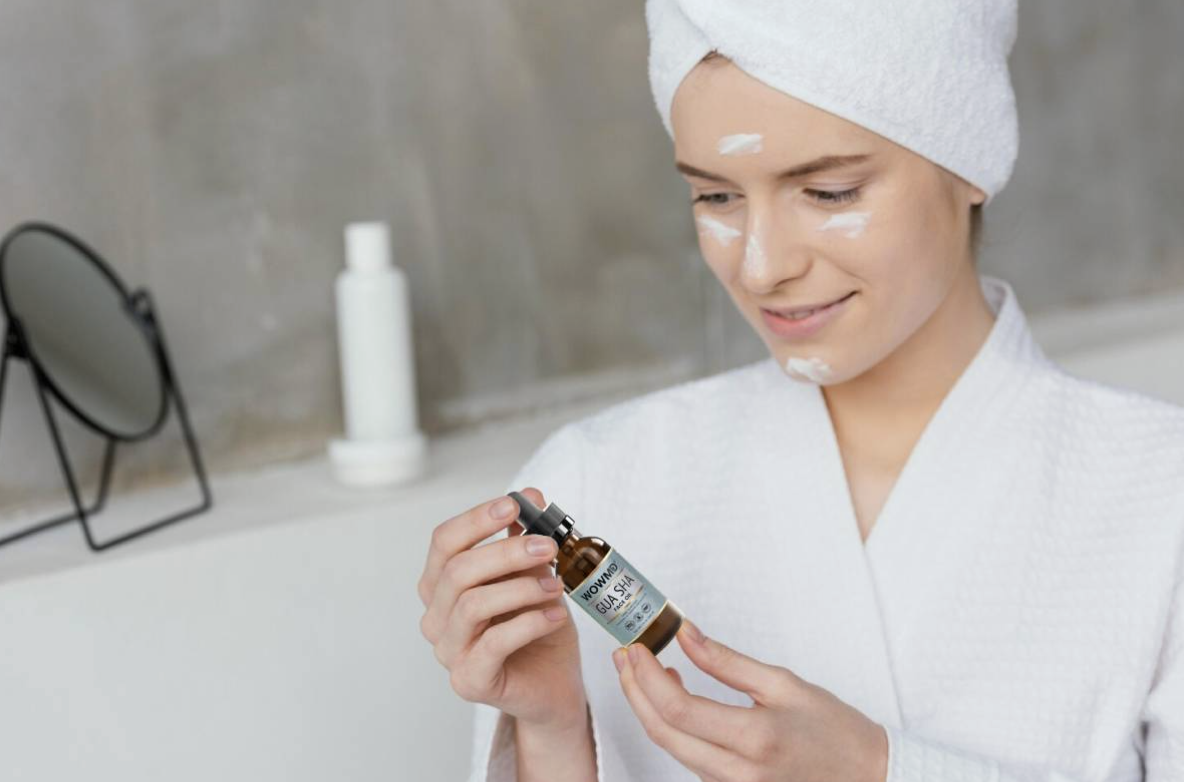
WOWMD Gua Sha Face Oil
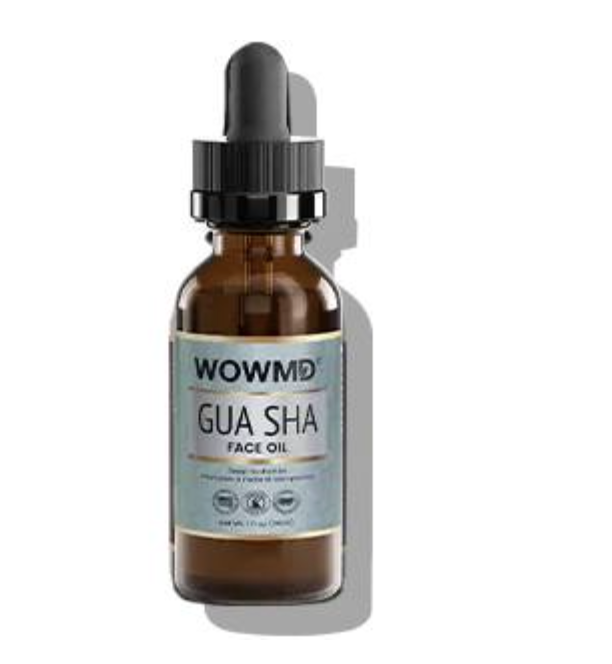 The standout quality: A silky botanical blend that offers massage-friendly glide without the dense finish of a traditional facial oil.
WOWMD Gua Sha Face Oil takes the top position because it strikes the most useful balance between skincare and facial massage. Its botanical formula combines rosehip, pomegranate seed, camellia, and vitamin E with additional conditioning oils.
Where it stands out is its texture. The oil is intended to feel silky and lightweight, providing enough movement for the Gua Sha tool without making the face feel excessively coated. That balance makes it practical for both a brief morning massage and a slower evening routine.
Rosehip and pomegranate seed oils contribute fatty acids and antioxidant compounds, while camellia oil helps give the formula its smooth, conditioning quality. It is also made without mineral oil, silicones, parabens, sulphates, phthalates, or drying alcohol.
The skin feels: Smooth and lightweight with a nourishing finish.
Best suited to: Normal, dry, or combination skin and anyone new to facial oils.
What gives it the edge: It feels specifically suited to massage while remaining wearable as part of an everyday skincare routine.
The trade-off: It is primarily available through the brand’s website.
Our verdict: The strongest all-rounder for readers who want reliable glide without committing to an especially rich or heavily fragranced oil.
VRAIKO Calanthe Orchid Gua Sha Face Oil Serum
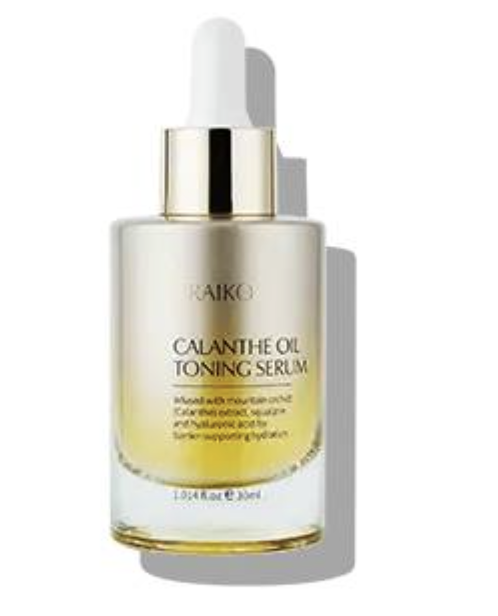 The standout quality: A facial oil-serum hybrid that offers hydration and light slip at an accessible price.
VRAIKO Calanthe Orchid Gua Sha Face Oil Serum is designed for those who enjoy facial oils but don’t want to end up with a greasy film. It has a relatively light formula that includes Calanthe orchid extract, squalane, vitamin C derivatives, hyaluronic acid, and glycerin.
Its serum-like consistency makes it particularly appealing for short Gua Sha sessions or daytime skincare. It absorbs faster than a simple massage oil, which makes the finish lighter and easier to build on under other products.
The formula is fragrance-free, vegan, and cruelty-free. It’s also free of mineral oil, parabens, and phenoxyethanol, which can be a plus for consumers wanting a less complex daily product.
The skin feels: Light, hydrating, and relatively fast-absorbing.
Best suited to: Normal, oily, or combination skin and anyone who avoids rich oils.
What gives it the edge: It combines an approachable price with a modern, serum-like texture.
The trade-off: It may absorb too quickly for a long massage, and published customer feedback is limited.
Our verdict: A smart choice for quick routines, oil beginners, and readers working with a smaller beauty budget.
Wildling Empress Barrier Repair Oil
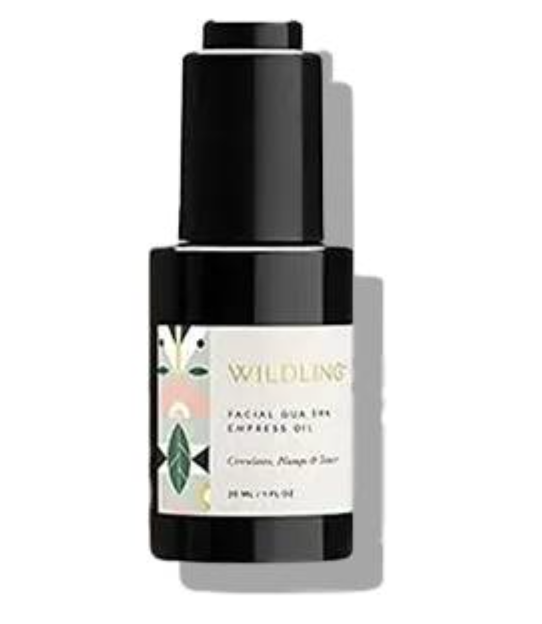 The standout quality: A rich, cushioning botanical oil created for slow and indulgent facial massage.
Wildling Empress Barrier Repair Oil feels less like a basic skincare product and more like part of a complete self-care ritual. It has a good amount of texture, which makes the Gua Sha tool glide easily and last longer than a lot of light-texture options.
This blend is formulated with olive fruit oil and a variety of botanical resins and extracts such as Balm of Gilead, frankincense, myrrh, guggul, opoponax, and labdanum. The oil has a unique earthy quality because of the ingredients without synthetic fragrance and essential oils.
The thicker texture could also be very comforting for dry or aging skin, particularly if applied in your nighttime skin care regime.
The skin feels: Rich, cushioning, and slow to absorb.
Best suited to: Dry or mature skin and longer evening massage sessions.
What gives it the edge: Its substantial texture continues to provide slip throughout an extended routine.
The trade-off: It has a premium price and a naturally earthy aroma that will not appeal to everyone.
Our verdict: The most indulgent option, but best reserved for those who genuinely enjoy richer botanical oils.
Ouiloe Gua Sha Facial Oil
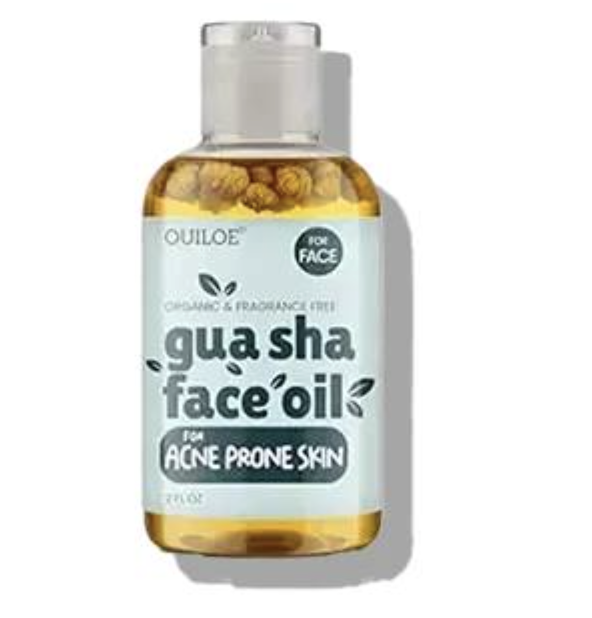 The standout quality: An affordable, unscented blend designed specifically with blemish-prone skin in mind.
Ouiloe Gua Sha Facial Oil is a blend of grapeseed oil, Abyssinian oil, meadowfoam seed oil, jojoba oil, almond oil, and vitamin E oils. This formula aims to provide a buttery-feel massage without the strong perfume or clumpy consistency found in some herbal formulas.
The scentless application might be attractive to individuals who may have sensitive skin that does not tolerate much fragrance. The two-ounce version also provides a better product amount than some of the smaller high-end ones, and it makes sense to use it regularly on the face, jawline, and neck.
But for those who have skin that is prone to blemishes, any facial oil might have unpredictable effects. Although the product is marketed as lightweight and non-comedogenic, customer experiences are mixed.
The skin feels: Lightweight, smooth, and unscented.
Best suited to: Blemish-prone skin and fragrance-sensitive users seeking an affordable option.
What gives it the edge: Its simple positioning, larger bottle, and accessible price.
The trade-off: Some reviewers mention breakouts or packaging issues.
Our verdict: A practical budget option, but one that should be introduced gradually and patch-tested carefully.
How to choose the right facial oil for gua sha
Here are a few things to keep in mind:
Match the texture to your routine
A short morning massage works well with a light oil that absorbs cleanly. Longer evening routines generally need a richer texture that remains slippery for several minutes.
Consider your skin type
Dry and mature skin may appreciate nourishing oils such as camellia, rosehip, or squalane. Oily or blemish-prone skin may prefer lighter formulas, although no facial oil is guaranteed to be breakout-free, according to Consumer Health Digest.
Be realistic about fragrance
Aromatic botanical oils can make a routine feel luxurious, but they may not suit sensitive skin or anyone who prefers fragrance-free skincare.
Look beyond the ingredient list
A beautiful list of plant oils does not tell you how the product will actually feel. Texture, absorption, and the number of drops needed are just as important.
Think about regular use
A premium oil may be worthwhile for an occasional ritual. For daily Gua Sha, bottle size, price, and ease of repurchasing become more important.
How to use facial oil with gua sha
Use any water-based toner and/or serum first, if needed, on clean skin. Apply 2 to 3 drops of facial oil between your fingers and massage it around the face, jawline, and neck.
Hold the Gua Sha tool almost flat against the skin. Apply gentle pressure and slow strokes, not scraping with the narrow edge.
The tool should move without skipping or pulling. Add another drop if the oil absorbs before you finish, but avoid making the skin so slippery that the tool becomes difficult to control.
After your massage, you can let the oil stay on as the last step. Blot away any excess if necessary and clean the tool thoroughly after every use.
Common gua sha oil mistakes
Using too little oil is one of the most common mistakes. When the tool begins dragging, people often compensate by applying more pressure, which can lead to unnecessary redness or tenderness.
Using too much is not ideal either. An oversaturated face makes it harder to control the tool and can leave the routine feeling messy.
Other mistakes include choosing an oil solely because it is labelled “natural,” ignoring fragrance sensitivities, and introducing a rich blend across the entire face without patch testing it first.
Do not use Gua Sha over open skin, sunburn, or active irritation. Anyone who has recently undergone injectables, facial surgery, or an intensive professional treatment should ask their practitioner when massage can be resumed safely.
The takeaway
A great Gua Sha oil should do more than look appealing on a bathroom shelf. It needs to provide smooth, controlled movement, complement your skin type, and leave your complexion feeling comfortable once the massage is over.
Lightweight oils are often easier to use regularly, while richer formulas can transform an evening routine into something more indulgent.
The best choice is not necessarily the most expensive or ingredient-heavy; it is the one whose texture makes your Gua Sha practice feel effortless, enjoyable, and worth repeating.
FAQs:
Is facial oil necessary when using gua sha?
Some form of lubricating skincare is necessary to prevent the tool from dragging. Facial oil is popular because it usually provides longer-lasting slip than a moisturiser or serum.
What type of oil is best for gua sha?
The best oil gives the tool a controlled glide without feeling uncomfortable on your skin. Dry skin may prefer a richer formula, while oily or combination skin may favour a lighter blend.
Can gua sha facial oil clog pores?
Any facial product can potentially cause congestion depending on the formula and the individual. Those with blemish-prone skin should introduce new oils gradually and patch test first.
How many drops should I use?
Begin with two or three drops. Add one more if the tool starts to skip or drag before the massage is complete.
Should I wash the oil off afterward?
Usually, no. Facial oil can remain on as the final step of an evening routine. Use less or lightly blot the skin if the finish feels too rich.
Can I use gua sha every day?
Gentle Gua Sha can be incorporated regularly if the skin tolerates it. Start with a few sessions each week and avoid excessive pressure.