The Body-Care Habits That Make a Beauty Routine Feel More Complete
Main image – Ola Szkolda
SPONSORED
Body care is often something we only think about once something starts bothering us. Maybe your heels have started snagging on the sheets, your hands feel dry from constant washing, or your shoulders are aching after a day spent hunched over a desk. While we might have our facial skincare routine down to a fine art, the rest of the body can end up getting attention only when it starts asking for it.
Luckily, taking better care of it does not have to mean adding another elaborate routine to your day. A handful of simple habits can make a surprisingly big difference. Being gentler in the shower, remembering to take your SPF beyond your face, moving regularly, getting out of sweaty clothes after exercise and paying a little attention to your hands and feet can all help make your beauty routine feel more complete.
What happens after the shower matters
A long, hot shower can feel wonderful, especially at the end of a tiring day. It is often afterwards that you notice the downside, when the skin on your arms or shins starts feeling uncomfortably tight.
Turning the temperature down to warm can sometimes be all it takes. There is no reason to give every inch of your body an enthusiastic scrub every single day, either. You will still want to properly cleanse anywhere that has accumulated sweat, sunscreen or deodorant, but there is no benefit in going overboard.
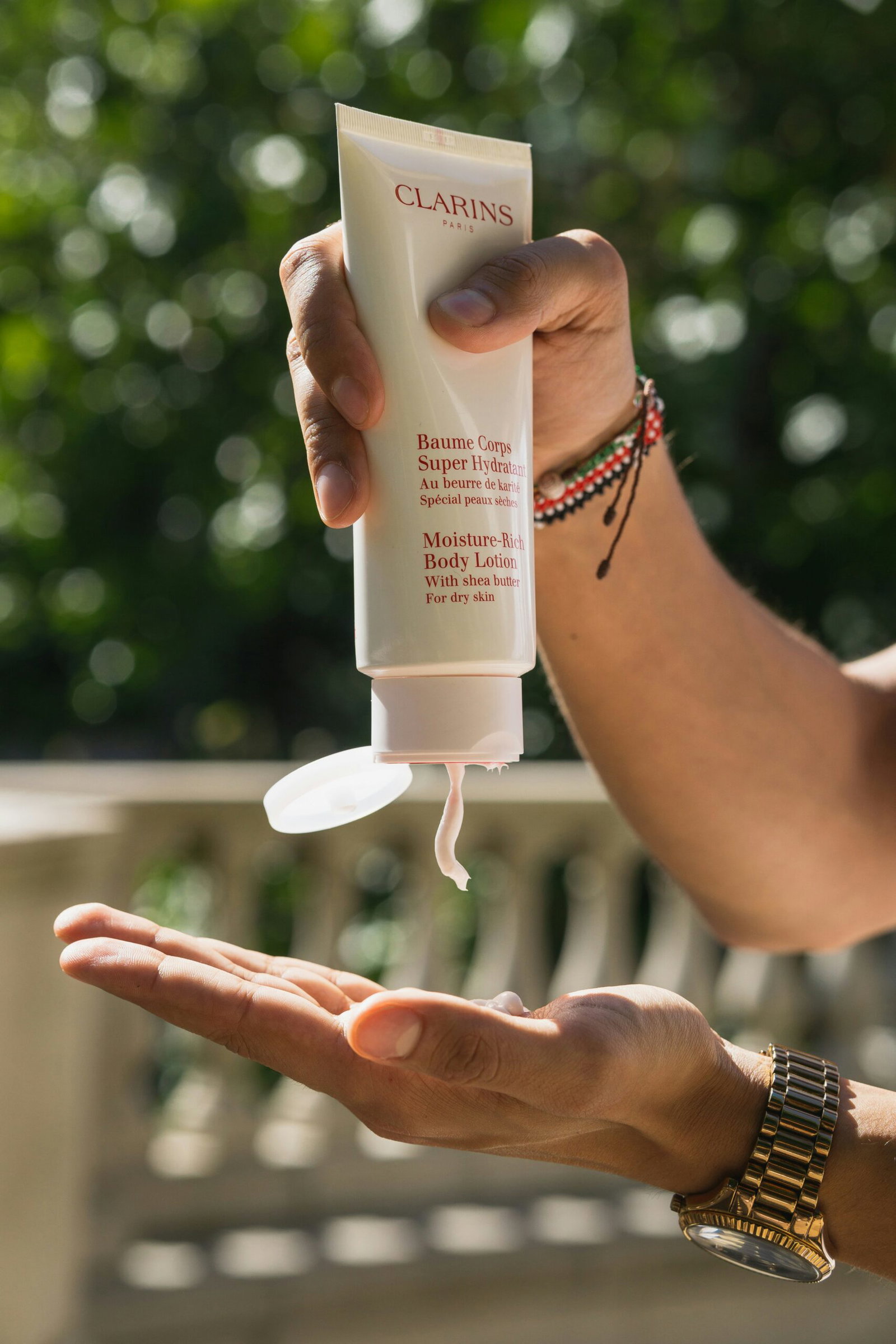
Image – Collins Lesulie
What you do once you step out of the shower matters too. You are far more likely to remember body lotion if the bottle is sitting somewhere you can reach for it straight away. Leave it in another room and, somehow, it soon becomes the product you remember to use about twice a month.
The texture you choose can make a difference to how likely you are to use it, too. Richer creams are useful for dry legs and elbows, while something lighter is much more practical if you are about to get dressed. Because few of us have ten minutes to stand around waiting for a body butter to stop clinging to our jeans.
Some areas always show dryness first
Elbows, knees, ankles and heels often seem to be the first places where dryness makes itself known. Between clothes, shoes, floors and bedding, these areas are constantly coming into contact with something, so it makes sense that they might need a little more attention than everywhere else.
Gentle exfoliation can help when skin starts feeling rough, but scrubbing away at it too enthusiastically is more likely to make matters worse. If your skin looks red by the time you have finished, that is a pretty good indication to dial things back. For most people, a couple of times a week will be more than enough.
Heels are particularly easy to ignore right up until the moment you want to put on a pair of sandals. Applying a richer cream before bed can help, particularly if you pull on a pair of cotton socks afterwards. Our hands face a similar problem. Between soap, sanitiser, household cleaning products, cold weather and sun exposure, there is plenty working against them.
Leaving hand cream next to the sink might sound ridiculously basic. But that is precisely what makes you more likely to actually use it.
Movement belongs here too
We tend to associate a beauty routine with the products sitting on our bathroom shelves, but how much we move affects the way our bodies feel too. Spend the whole day sitting down and it is easy to end up with tight hips and shoulders that have gradually crept forwards. By late afternoon, you might even notice your lower back feeling stiff when you finally get up.
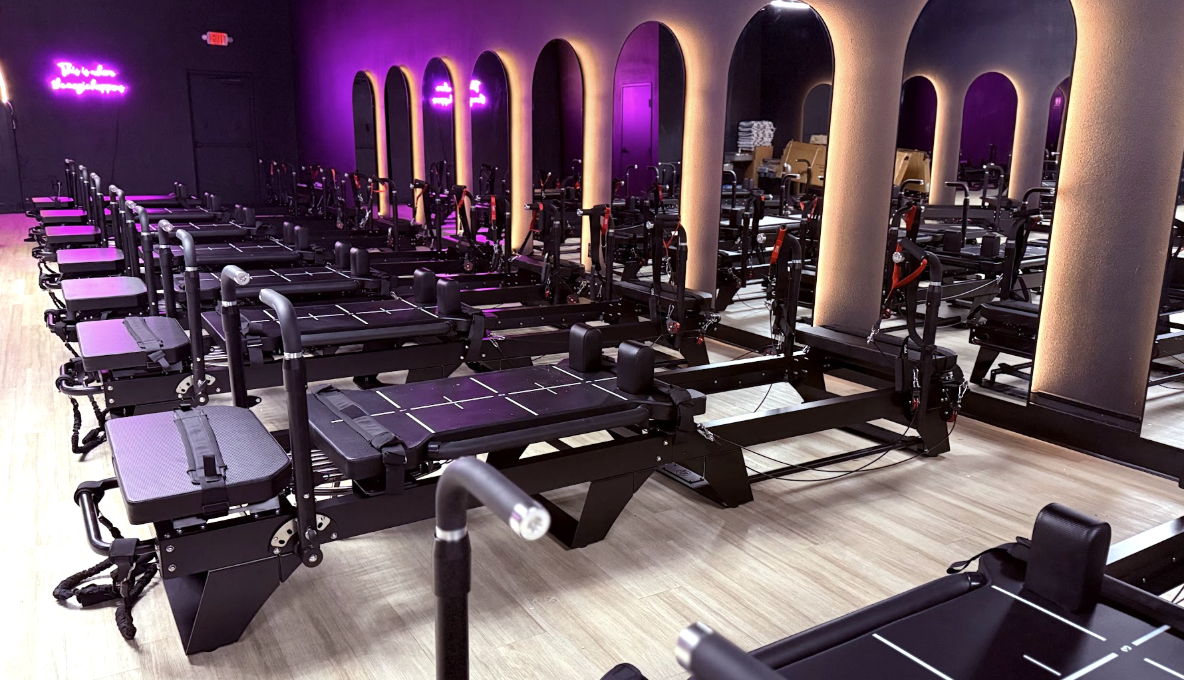
Image – Lagree
Even something as simple as going for a walk after work can make a difference. Stretching, Pilates and slower resistance training are other options. If you prefer a more structured workout, you might consider a compact Lagree machine for sale for controlled strength sessions. Equally, a mat, a couple of resistance bands and twenty minutes on the living-room floor may be all you need.
Exercise does not need to be dressed up as yet another way to look better. Moving your body is simply another part of taking care of it. And the routine that really counts is the one you can manage on an entirely unremarkable Wednesday, not just the one you do when you happen to have an afternoon to spare.
SPF gets forgotten below the face
For plenty of us, putting sunscreen on our face is now an automatic part of getting ready. Yet somehow the neck, chest, shoulders and hands are still remarkably easy to forget.
And it is often during completely mundane moments that those areas end up exposed. Your hand is next to the window while you drive. You have lunch outside. You throw on a sleeveless top. Or you spend an hour walking around without really registering how long you have been in the sun.

Image – Ohlamour Studio
The American Academy of Dermatology recommends applying a broad-spectrum, water-resistant SPF 30 or above to exposed skin. So, in practice, your sunscreen routine should extend beyond your cheeks and forehead.
Keeping a larger bottle somewhere visible near the front door can make remembering body SPF much easier. It can also be worth keeping a smaller tube in your bag for your hands, particularly when you need to reapply after washing them.
Get out of your workout clothes
The workout is over, but somehow the leggings remain on. You make a coffee, answer some emails, have lunch and perhaps nip out to do an errand. Suddenly two hours have disappeared and you are still sitting around in the same damp workout clothes.
Changing into something clean and dry is one of the easiest things you can do once you have finished exercising, especially when your kit is damp with sweat. A quick shower can be useful too, although there is no reason for it to turn into an elaborate post-workout ritual.
Your hair does not necessarily need the same treatment. A workout does not automatically mean you need to shampoo it from scratch. On some days, drying sweaty roots, rinsing around your hairline or simply allowing your scalp to cool down may be enough.
Breakouts on the body can make reaching for a scrub feel particularly tempting. But adding even more friction is rarely what already irritated skin is asking for.
Hands and feet don’t need much
Despite looking at our hands countless times a day, many of us do very little for them until the skin becomes dry enough to crack. Feet suffer from almost the opposite problem: because they spend so much of the time out of sight, weeks can pass without us giving them much thought at all.
The good news is that neither requires an elaborate routine. Keeping hand cream by the sink, cuticle oil beside the bed and a foot cream to use before sleep takes care of much of the basics. Toenails are easier to stay on top of when you trim them regularly, too, rather than suddenly having to sort them out the night before a holiday.
Taking the time to properly dry between your toes is another small but worthwhile habit, particularly after showering or working out. None of these things is going to feel like the most glamorous part of your beauty routine, but doing them regularly can prevent problems further down the line.
Some nighttime routines should be short
A bad night’s sleep has an annoying habit of announcing itself on your face the following morning. Your eyes look more tired, your makeup does not seem to sit quite the same way and even the process of getting ready can feel more irritating than usual.
Unfortunately, no serum can do the job of a proper night’s rest. The NHS also notes that being physically active regularly can help support both sleep and mood, giving us yet another reason to think about movement as part of taking care of ourselves more broadly.
But that does not mean every evening needs to become an exercise in self-improvement. Sometimes, washing your face, applying moisturiser, putting a little cream on dry hands and getting yourself into bed really is enough.
The best stuff is usually ordinary
Looking after the body becomes much easier once it stops feeling like one more thing on your to-do list. Moisturise before your skin reaches the point of feeling painfully dry. Remember SPF on the parts of your body that are actually exposed to the sun. Get changed when you finish exercising. Move regularly enough that you do not spend the entire week feeling stiff. And give your hands and feet some attention before they reach the point where you cannot ignore them.
There is still plenty of room for the fun stuff – masks, oils, tools and treatments included. They just should not have to do all the work. The habits that make the biggest difference are often the least exciting ones, but fortunately, they also tend to be the easiest to stick to.